


Once dominant in Asia, a team returns to the Asian Cup after 16 years.



Following a 16-year hiatus since the 2010 final, the North Korean women's national team makes its official comeback at the 2026 Asian Cup, aiming to reclaim its former position as the dominant force in Asian women's football.
After a 16-year absence since the 2010 final, the North Korean women's national team officially returns to the stage of the 2026 Women's Asian Cup, driven by the desire to restore its once-formidable reputation. At 9 a.m. on March 3rd, they will step into their opening Group B match against Uzbekistan, marking a new chapter for a team once regarded as the "big sister" of Asian women's football.
The success story of North Korean women's football began in 1986, when the idea of a Women's World Cup was initiated at FIFA's annual congress in Mexico. Recognizing a strategic opportunity, North Korean delegates quickly formulated a long-term development plan. From the late 1980s, under the late leader Kim Jong-il, women's football received systematic investment: it was introduced into schools, teams were established within the military, and a nationwide infrastructure system was developed.
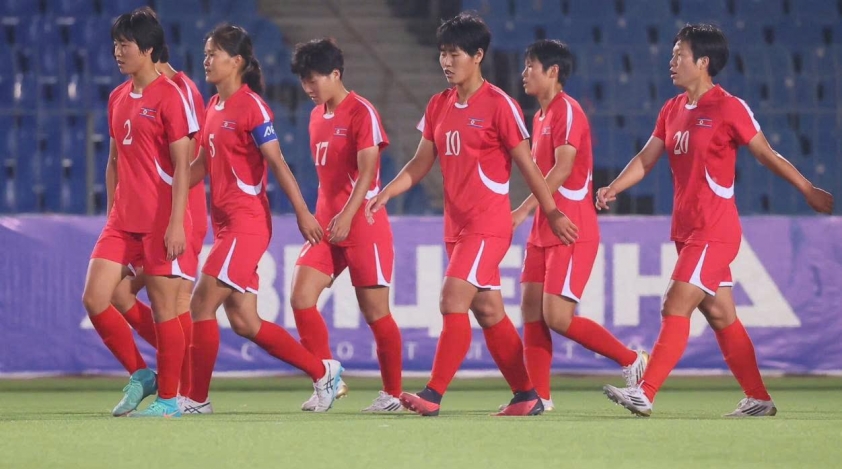
Results came swiftly. From the mid-1990s to 2010, North Korea won the Asian Cup three times (2001, 2003, 2008), becoming a formidable force in the region. Matches at the Rungrado 1st of May Stadium were often packed with spectators. The female players were honored as national heroes, receiving valuable rewards and the privilege of living in Pyongyang.
However, a negative turning point occurred in 2011 at the Women's World Cup in Germany, when five players tested positive for banned substances. A four-year ban from FIFA caused the team to miss the 2015 World Cup and marked the beginning of over a decade of near "disappearance" from the international football map. Political isolation, economic sanctions, and the COVID-19 pandemic further complicated their journey back.
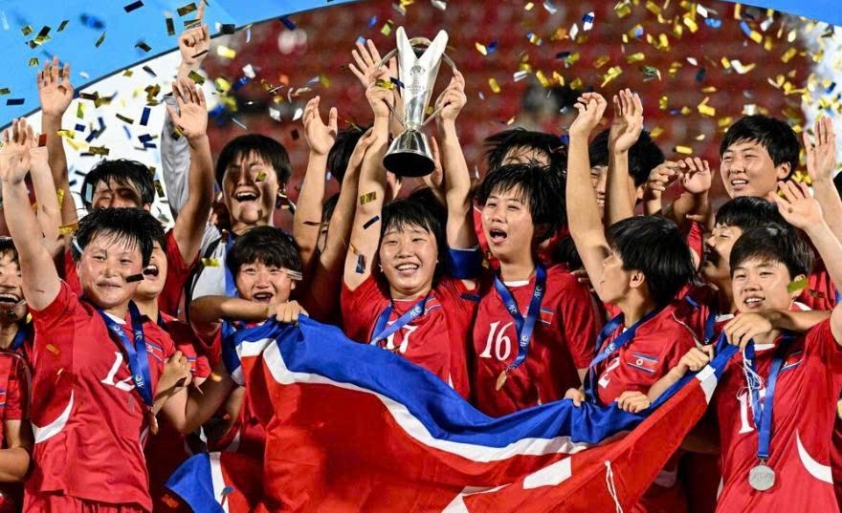
Nevertheless, behind the scenes, youth development work continued. In 2013, the Pyongyang International Football School was established, laying the foundation for the next generation. Success exploded when North Korea became the reigning champion of the Women's U17 and U20 World Cups (crowned in September 2024), while also dominating Asian youth tournaments with a total of 14 major and minor titles. Names like Yu Jong-hyang, Choe Il-son, and Jon Il-chong are seen as the future of the national team.
At the 2026 Women's Asian Cup on Australian soil, North Korea is placed in Group B alongside China, Bangladesh, and Uzbekistan. Their return after 16 years is not merely a reappearance in a tournament, but also a test of their ambition to restore past glory – a time when this mysterious team made all of Asia wary.


Wonderfulshortvideo
Kvaratskhelia and Ronaldo 🫶


🇪🇸 Spain 🆚 Argentina 🇦🇷
When Diogo Costa saved EVERY penalty he faced in the shoot-out 🤯🤯🤯
The movement is electric ⚡️
Never gives up 💪
Things you really love to see
Ahead of his 100th cap, Sir Keir Starmer had this message for Maro Itoje…
 Links
Links
 Contact
Address:123
Number:+123
E-mali:i123@gmail.com
 App
App